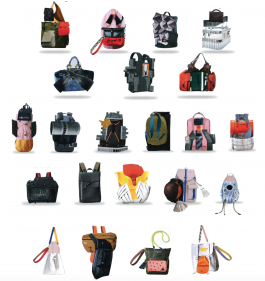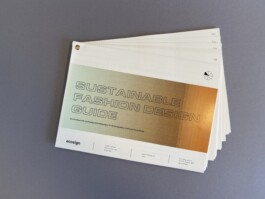
THE SUSTAINABLE FASHION DESIGN GUIDE
- a handbook for sustainable choices in the design phase.
Designing sustainable apparel, i.e. making holistic sustainable decisions during the design process, is not always easy due to the complexity of the supply chains. Based on the assumption that already 80% of the decisions made during the design phase determine the sustainability of a product, we as designers have a special responsibility, which so far has often been largely neglected in the past. Therefore, there is a need for an updated and comprehensive overview of the field of "sustainability in the textile industry" from a designer's point of view with concrete options for designers to take sustainable action.

The Sustainable Fashion Design Guide resulted from my final thesis in the Masters Programme Sustainable Design MA at the Ecosign Academy in Cologne. The guide helps designers to develop a basic understanding of sustainability in the textile industry and to translate this knowledge into products or systems in their everyday design work. The key points here are raising awareness of sustainability, one's own responsibility as a designer, interdisciplinary communication and collaboration among all stakeholders along the supply chain, substantive education on the sustainability of materials and processes, sustainable design strategies (linear and circular), and the creation of holistically conceived design concepts.
The structure of this guide is based on the individual life cycle phases of clothing and assigns the various sustainability strategies in fashion design to the respective phases. The guide offers an educational knowledge section in each chapter, which concludes with applicable tools. Sustainability tools and workshops have been specially adapted to the field of fashion design.
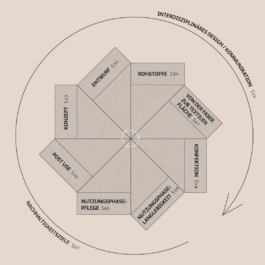
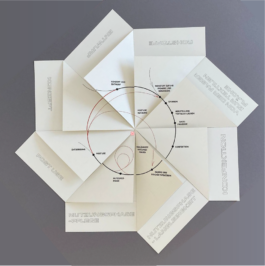
THE SUSTAINABILITY WHEEL
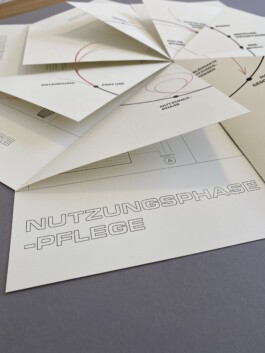
In order to facilitate life cycle thinking in everyday design and to have the developed options for action from the tools at hand, the wind wheel diagram was conceived in addition to the guide.
The diagram consists of eight pages, on the inside of which the developed options for action can be entered. These are folded individually and folded together to form a circle. By attaching it to a rotating module on the wall, chapters can be viewed and further processed
PROJECT OVERVIEW